
role: Supervisors

Dr. John McCrae
CRT in AI Supervisor
I am a lecturer above-the-bar at the Data Science Institute, Insight Centre for Data Analytics and ADAPT centre at the National University of Ireland Galway and the leader of the Unit for Linguistic Data. I am the coordinator of the Prêt-à-LLOD project and work package leader in the ELEXIS infrastructure. My research interests include the following:
- Ontologies, lexicography and the lexicon-ontology interface
- Collaborative development and publishing of language resources
- Big data and data science
- Linked data and the Semantic Web
- Machine translation and multilingualism
- Machine learning methods for NLP
- Digital Humanities
- Under-resourced languages
I obtained my PhD from the National Institute of Informatics in Tokyo under the supervision of Nigel Collier and until 2015 I was a post-doctoral researcher at the University of Bielefeld in Bielefeld, Germany in Prof. Philipp Cimiano’s group, AG Semantic Computing.
OTHER TEAM MEMBERS

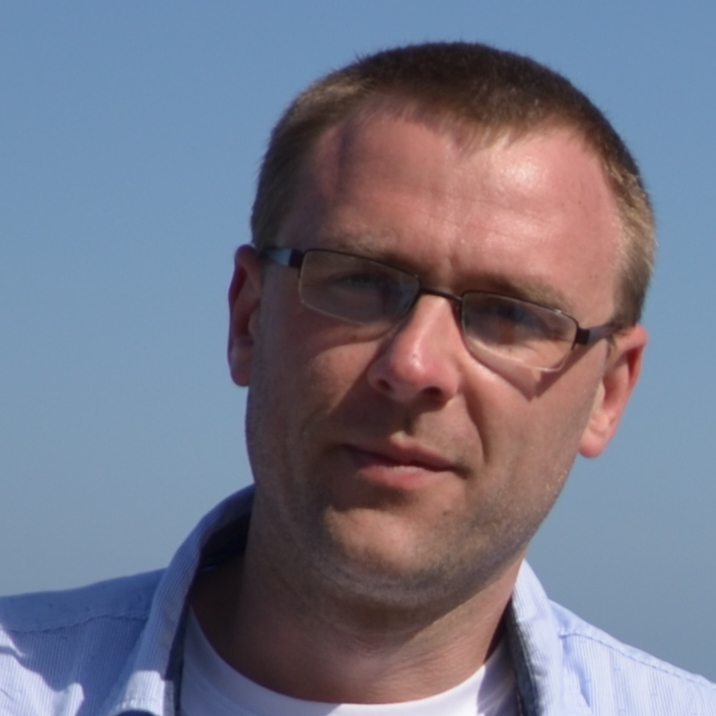
Dr. Mihael Arcan
CRT in AI Supervisor
I am a research fellow at the Data Science Institute (DSI) and Adjunct Lecturer at the School of Computer Science at the National University of Ireland Galway (NUI Galway). I am working in the Unit for Natural Language Processing (UNLP), which is led by Dr Paul Buitelaar. My main research topic focuses on terminology and knowledge graph injection into neural machine translation architecture. Recently, I am also following the work on dialogue systems and natural language generation with multi-modal data. I am primarily funded by the nationwide Insight SFI Research Centre for Data Analytics, which is also hosted within DSI.
OTHER TEAM MEMBERS

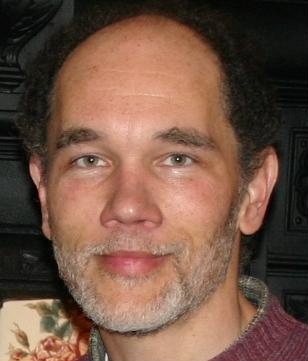
Professor Gregory Provan
CRT in AI Supervisor
Gregory Provan is a Professor of Computer Science at UCC. His research interests include machine learning, systems modeling and control. In particular, his recent work has focused on deep learning and deep reinforcement learning. Prof. Provan is the director of the SFI Spoke on Autonomous Vehicles, and this is one of his key application areas.
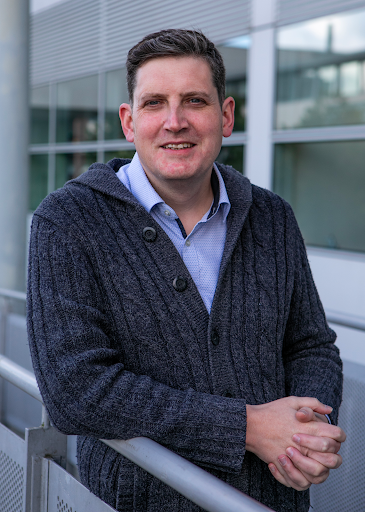
Dr. Brian Davis
CRT in AI Supervisor
Brian Davis is an Assistant Professor at the School of Computing, DCU. Previously, he was a Lecturer in Computer Science at Maynooth University and Research Fellow, Adjunct Lecturer and Research Unit Leader at the Science Foundation Ireland (SFI) funded INSIGHT Centre for Data Analytics, NUI Galway (NUIG) for four years and led the Knowledge Discovery Unit. He also coordinated a 3-year Horizon 2020 Innovation Action – SSIX – Social Sentiment Financial Indexes (Grant No 645425). His core expertise intersects with Natural Language Processing (NLP) and Ontology development. Specific research interests include: offensive language detection, Data2Text NLG, Knowledge Base population from text.
He has reviewed several conferences and journals in the field of Semantic Web and NLP over the years i.e., EMNLP, COLING. ACL, NAACL, ESWC, ISWC, LREC,NLDB, SEMANTICs and JNLE, LRE, JWS, ACM Surveys. He has over eight years research experience in Text Analytics, Information Extraction and the intersection with NLP for ontology development and access. His current research interests include exploring pipelined neural architectures for i) data/knowledge -to-text Natural Language Generation (NLG) systems and ii) relation extraction and/or event extraction
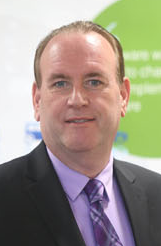
Professor Mike Hinchey
CRT in AI Supervisor
Professor Mike Hinchey is the former Director of Lero and Professor of Software Engineering at the University of Limerick. Prof Hinchey was previously Director of the Software Engineering Laboratory at NASA Goddard Space Flight Centre in Greenbelt, Maryland. He remains as a consultant to NASA. His work with NASA was implemented in various space projects and will be incorporated in future missions. Particular areas of software research for Professor Hinchey include Formal Methods, Autonomous Systems and Software Reliability.

Dr. Steve Prestwich
CRT in AI Supervisor
Steve Prestwich has lectured in the Computer Science department since 1997. He is an Investigator on the Insight and Confirm projects, and a PhD supervisor in the Centre for Research Training in Artificial Intelligence. He works in areas including artificial intelligence, optimisation, machine learning, constraint programming, Boolean satisfiability, operations research and forecasting. He previously worked in the Advanced Technology Centre, Nortel PLC, Harlow Laboratories, England, and in the European Computer Industry Research Centre (ECRC), Munich, Germany. He has a PhD in Computer Science from the University of Manchester, UK, and an MA in Mathematics from St Peter’s College, University of Oxford, UK.
OTHER TEAM MEMBERS

Professor Dirk HJ Pesch
CRT in AI Supervisor
Dirk Pesch is a Professor in the School of Computer Science and Information Technology where he leads a number of research initiatives in the area of future networked systems for the Internet of Things and Cyber-Physical Systems with applications in smart and connected communities and smart manufacturing.
Dirk is the Director of the Science Foundation Ireland funded Centre for Research Training in Advanced Networks for Sustainable Societies (http://www.advance-crt.ie). He is also a co-Principal Investigator and executive member of the SFI CONFIRM Centre for Smart Manufacturing (http://www.confirm.ie), a co-Principal Investigator of the SFI funded CONNECT Centre for Future Networks (http://www.connectcentre.ie) and a steering committee member of CONNECT’s ENABLE research programme on smart communities. Dirk is also a steering committee member of the Cork Smart Gateway (http://www.corksmartgateway.ie), a smart communities initiative in Cork City and County. Since 2000, Dirk has been personally involved in Irish and European research grants totalling in excess of €80M of which approx. €16M have directly supported his own research.
Dirk has (co-)authored over 220 scientific articles and book chapters. He co-edited the first book focused on Internet of Things technologies enabling energy-positive urban neighbourhoods, published by Academic Press. He is an editorial board member of Springer Nature Wireless Networks and MDPI Sensors. He also contributes to international conference organisation in his area of expertise including flagship conferences such as the IEEE International Conference on Communications, IEEE Globecom, IEEE World Forum on the Internet of Things, IEEE Wireless Communication Networks Conference, IEEE WoWMoM, IEEE VTC, and IFIP Networking as well as other conference and workshops.
Prior to joining University College Cork in 2019, Dirk was with Cork Institute of Technology (now Munster Technological University), initially as a Lecturer, then Senior Lecturer in the Department of Electrical and Electronic Engineering. During his time in CIT, he developed research activities that led to the establishment of the Nimbus Research Centre of which he became the founding director in 2009. Under his leadership, Nimbus became a leading centre for application and industry-focused research in Internet of Things and Cyber-Physical Systems. In December 2016, CIT designated him as a Professor.
Before joining academia, Dirk was a design engineer with Nokia in Germany and the UK, developing and implementing communication protocols for a range of cordless telecommunication products. Dirk holds a Dipl.Ing (MEng) degree from RWTH Aachen University, Germany, and a PhD from the University of Strathclyde, Glasgow, Scotland, both in Electrical & Electronic Engineering.
Research Interests
My research mainly focuses on the design, optimisation and evaluation of communication protocols, management techniques, and system architectures for the Internet of Things (IoT) and networked Cyber-Physical Systems (CPS) and their applications to smart and connected communities and smart manufacturing. In my research we use mathematical modelling and computer simulation techniques to analyse the networked systems we study. We use machine learning techniques to predict and optimise their behaviour and performance.
In addition to the design and evaluation of such systems, I am also interested in addressing the interoperability problem of IoT/CPS, which limits widespread adoption of the technology to many real world problems and situations. Within this context, I am interested in co-design approaches of IoT/CPS services with end-users, in particular in the smart and connected communities space.
More recently, I have become interested in using Internet of Things technology to support wellbeing using mobile and wearable sensing technologies to collect human behavioural data and use machine learning to analyse and predict people’s wellbeing. For this, I collaborate with colleagues from the social sciences.

Dr. Josephine Griffith
CRT in AI Supervisor
Josephine Griffith
Recommendation and Collaborative Filtering
Recommendation tools are now a common component in many online sites which involve a user choosing to view or purchase items based on personal preferences. For example, books, movies, music, hotels, restaurants, etc.
Collaborative Filtering techniques are one approach to recommendation. These techniques use the previous preferences of users to recommend new items to a user.
Despite the prevalence of recommendation techniques, the area still remains a fruitful research one, from the perspectives of data available, approaches and techniques used and the analysis of the usefulness and novelty of recommendations, and many others.
Social Media Analysis and Tools
The advent of Social Media sites offers many new sources of data to analyse and use in novel ways. We have now available a vast amount of information about people, brands and corporations – what they say and what is said about them, who they connect to and who connects with them, how they respond to events and become authorities on events. Wars, sport, elections, floods, famines can all be viewed through the lenses of social media activity.
In particular, sentiment analysis techniques can be applied to analyse the influence and reach of brands and people. This analysis will most likely involve the following steps: gathering data from a social media forum (e.g. Twitter), categorising and clustering the data based on features and on sentiment; and identifying trends in the data.
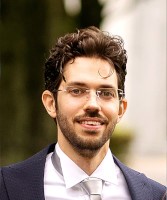
Dr. Giovanni Di Liberto
CRT in AI Supervisor
Giovanni Di Liberto received his Bachelor’s degree in Information Engineering in 2011 and his Master’s degree in Computer Engineering in 2013, both from the University of Padova, Italy. After a period working on his thesis at University College Cork (UCC, Ireland), he joined Edmund Lalor‘s research lab in Trinity College Dublin where he pursued a PhD in auditory neuroscience in the School of Electronic and Electrical Engineering. He received his PhD in 2017 and he joined the Laboratoire des Systèmes Perceptifs at École Normale Superieure (Paris) immediately after, under the supervision of Alain de Cheveigné and Shihab Shamma. Then, he briefly continued his work on speech communication with Richard Reilly as a postdoctoral researcher (TCD), while also working with Simon Kelly at UCD, expanding his expertise into the Decision Making domain. He holds the title of Assistant Professor in Intelligent Systems in the School of Computer Science and Statistics at Trinity College Dublin.
Giovanni’s scientific interests centre on understanding the brain mechanisms underlying speech comprehension. In his work, he develops data analysis methods and applies them to brain data to identify the neural processes responsible for the transformation of a sensory stimulus into its abstract meaning. Brain electrical data is measured with either non-invasive (e.g., electroencephalography – EEG) or invasive (e.g., electrocorticography – ECoG) technologies. The first aspect of his research is methodological and has produced novel experimental and analysis frameworks to investigate cortical auditory processing. The second aspect of his research is to use such novel methods to test theories on auditory perception, such as the hierarchical processing of speech and predictive processing theories (e.g. predictive coding). Finally, the third part of his work is translational and involves the identification of solutions to utilise his novel methods in applied settings, for example as tools to develop brain-computer interfaces (COCOHA project) or as objective measures for the monitoring of language development and healthy ageing.
Professor Carl Vogel
CRT in AI Supervisor
Professor Carl Vogel
Professor in Computational Linguistics
- Interim Head of School, School of Computer Science and Statistics
- Director, Trinity Centre for Computing and Language Studies
- Academic staff: School of Computer Science and Statistics
- Affiliated academic staff: Center for Language and Communication Studies, School of Linguistic, Speech and Communication Sciences
Qualifications
- BSc (Honors) Loyola, New Orleans, USA
- MSc Simon Fraser University BC, CA
- PhD University of Edinburgh, UK
Honors
Loyola Presidential Scholar (1984-1988); Marshall Scholar (1991-1994); Fellow, Trinity College Dublin (2002-present)
Research Areas
Computational Linguistics, Cognitive Science
Current preoccupations
Defamatory and toxic text analytics, with Caliber.
The MULTISIMO project on multimodal interaction. The EC counts this project among its success stories.
Investigator within the SFI Research Centre, CNGL and its successor, ADAPT.
A book on Internet Research Methods has been published by SAGE (written by Claire Hewson, Carl Vogel and Dianna Laurent).
In 2021, this book on Internet Research Methods (written by Claire Hewson, Carl Vogel and Dianna Laurent) and published by SAGE was translated into Chinese translated by Haijun Dong for the China Renmin University Press.
Member (founding Chair) of the (SCSS Research Ethics Committee).
OTHER TEAM MEMBERS
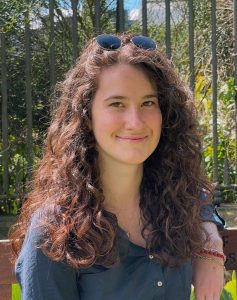

Dr. James McDermott
CRT in AI Supervisor
James McDermott is a Lecturer in Computer Science in the National University of Ireland, Galway. He holds a BSc in Computer Science with Mathematics from the National University of Ireland, Galway, and a PhD in evolutionary computation and computer music from the University of Limerick. He has also worked on supercomputing in Compaq/Hewlett-Packard. His post-doctoral work was in evolutionary design and genetic programming in University College Dublin and Massachusetts Institute of Technology. His research interests are in program synthesis, evolutionary computing, artificial intelligence, and computational music and design. He has chaired the EuroGP and EvoMUSART international conferences, is a member of the Genetic Programming and Evolvable Machines journal editorial board, and associate editor of ACM SIGEvolution.
OTHER TEAM MEMBERS

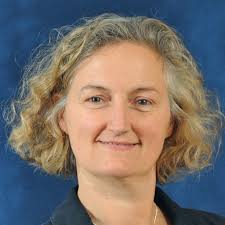
Professor Lucy Hederman
CRT in AI Supervisor
Prof. Lucy Hederman is an assistant professor in the School of Computer Science and Statistics at Trinity College Dublin. She is a member of the SFI funded ADAPT Centre, where she leads the Heterogeneity and Interoperability challenge. Her main research interests are in clinical decision support systems and clinical research data integration. She is currently working with TCD nephrologist Prof Mark Little on the data and knowledge engineering for the PARADISE project to predict flares of ANCA-vasculitis, and the FAIRVASC project which seeks to integrate vasculitis data across 8 clinical registries. She is working on the patient data platform for the Precision-ALS project, which is harnessing AI to provide new insights into motor neuron disease. She coordinated the PRTLI MediLink (Linking Records to Knowledge) project, and was a collaborator on the NDRC funded PaJR (Patient Journey Record) project, on the HRB funded Center for Primary Care Research, and on the EU funded FP7 TRANSFoRm project, which (amongst other aims) developed approaches to facilitate the deployment of diagnostic decision support in general practice in Europe.
OTHER TEAM MEMBERS